

From the flood-affected communities of Monaragala to the vibrant plantation estates of Nuwara Eliya over 2,100 participants including youth, women leaders, religious authorities and government officials came together to strengthen the foundations of peace, inclusion and resilience under NPC’s Plural Action for Inclusion, Reconciliation, and Social Justice (PAIRS) project funded by Misereor and co-funded by CAFOD.
Guided by the principles of participatory governance and inter-community solidarity, initiatives ranged from high level advocacy with senior clergy to grassroots problem solving in marginalised villages. Women and youth came from Anuradhapura, Nuwara Eliya, Kandy, Kurunegala, Puttalam, Polonnaruwa, Galle, Monaragala, Colombo, Ratnapura, Matara, Badulla, Kegalle, Batticaloa, Jaffna and Vavuniya engaging as not only participants but as architects of their own development, identifying local challenges and co-designing solutions. District Inter Religious Committees (DIRCs) evolved beyond dialogue into active agents of disaster response, economic empowerment and social cohesion.
The stories that follow are a testament to what is possible when communities lead, institutions listen and collaboration becomes the cornerstone of sustainable peace.
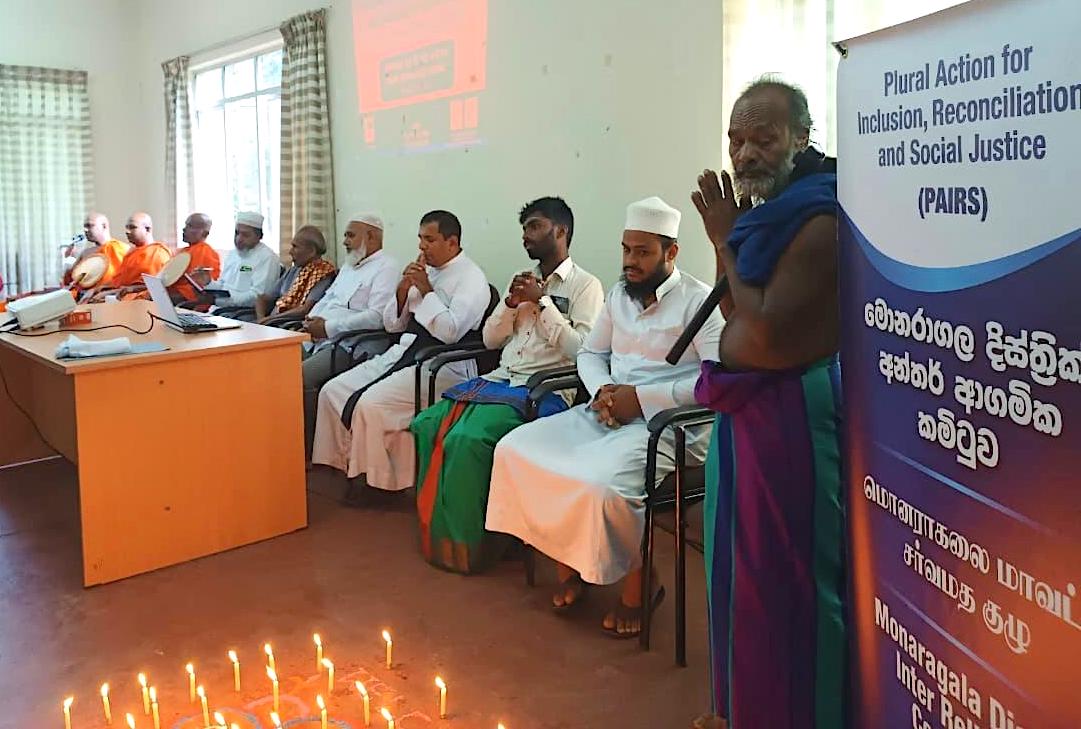
The DIRC meeting in Monaragala marked a historic step in local governance when the Rathugala Vedda community, led by Suda Wannila Aththo, joined the committee, ensuring indigenous representation. The meeting focused on practical action: the DIRC mobilised funds to renovate a flood damaged temple and coordinated support services for landslide-affected families. This transformed the committee from a discussion forum into an active agent of disaster response and reconciliation. Organised by NPC and Community Resource Protection Centre (CRPC), the event highlighted the DIRC's role in fostering social harmony, inclusive dialogue and community resilience.
“This is the first time I have participated in a meeting like this in Monaragala. It is encouraging to see people coming together beyond caste and religious differences. The recent disasters have taught us important lessons, especially the need to respect and love nature. Through this gathering, many people have gained a better understanding of one another,” said Suda Wannila Aththo.
“When the Kumbukan Oya overflowed, it caused severe damage to our temple, village and school. From that difficult moment, the Monaragala DIRC became stronger. We worked together through shramadana activities. Let us continue to work together and gather at the temple for future discussions,” said P. Subumaniyami Kurakkal from Monaragala.
Year-end meetings of DIRCs forged a unified, strategic network out of previously isolated groups. By assessing achievements and challenges, each DIRC has established a powerful new baseline for accountability. They are moving forward with district-specific priorities for the year ahead, ensuring that every inter-religious initiative is targeted and responsive to local needs. This coordinated push engaging leaders across the districts marks a decisive shift from periodic activity to sustained, strategic action. The committees mobilising as a cohesive force for harmony, equipped with clear lessons and a shared resolve to build more peaceful and cohesive communities.
Facilitation meetings for women Local Government Authority (LGA) members and community leaders empowered women leaders in the districts of Polonnaruwa, Matara, Kandy, Batticaloa, Vavuniya, Jaffna and Ratnapura created a dedicated space for their perspectives on peace and security.
The dialogues shifted women's roles from passive participants to recognised analysts and strategists in local peacebuilding. By facilitating the identification of district-specific threats and the exchange of intervention strategies, the meetings have strengthened a regional network of women leaders equipped with shared knowledge and a reinforced mandate to act as frontline agents in conflict prevention and community cohesion. The meetings enabled the women to identify key issues affecting peace and harmony, share experiences and strengthen networks for collective action. The discussions reaffirmed the critical role of women in peacebuilding, conflict prevention and fostering social cohesion at the local level.
“I welcome the cross-religious learning and the concrete planning for peace and harmony initiatives, committing to ongoing work in this area,” said Gajeepan Puvanarani, LGA women leader, from the Eelam People's Democratic Party.
Targeted interventions have transformed dialogue into concrete action, tackling the root causes of marginalisation across Sri Lanka. In Digala Estate, a bridge was built between a vulnerable community and national services. This initiative directly countered substance abuse and economic exclusion, resulting in six people enrolling in vocational training and five starting business registrations. A communitywide anti-drug sticker campaign provided a visible, lasting platform for change.
In Badulla, governance was made inclusive and responsive. The DIRC advocated for trilingual signage at the local hospital, a critical move to prevent emergency care delays for non-Sinhala speakers. A free health clinic transformed a point of potential tension into a demonstration of collaborative problem solving. Consultations with grassroots women leaders from across political spectrums have forged a unified advocacy front. They crystallised a clear blueprint for empowerment, prioritising economic independence for Malayaha Tamil women through targeted support for self-employment and equitable access to government services.
In Puttalam, women leaders defined the future of inclusive development by consensus. They established two strategic pillars: creating sustainable livelihoods through a dedicated marketplace and ensuring broad-based equity by championing inclusive services and spaces for people with disabilities. These actions show a decisive shift from discussion to delivery. They are building community driven stability by addressing specific social harms and economic root causes, ensuring future interventions are precisely targeted, owned by the community and fundamentally effective.