

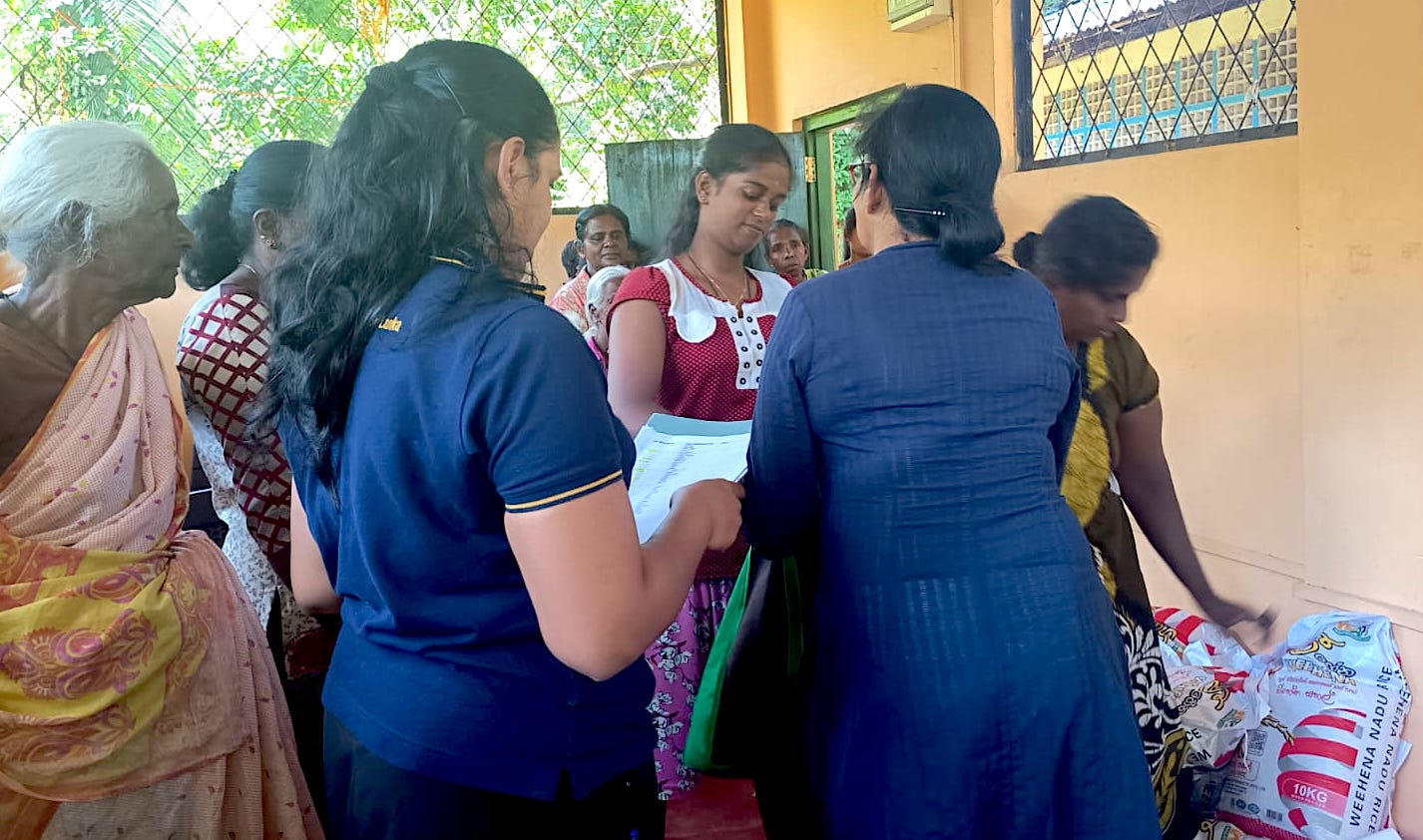
NPC’s Strengthening Women’s Leadership in Sri Lanka project, funded by the National Endowment for Democracy, supported communities severely affected when Cyclone Ditwah made landfall in November, triggering one of the country’s most devastating flood disasters in over 20 years. Nearly 2.2 million people across all 25 districts were impacted, including communities engaged through the Women Organised for Inclusion through Community Engagement (WOICE) project. Homes, livelihoods and basic necessities were lost overnight, pushing already vulnerable families into deeper hardship. Amid this crisis, women emerged not only as survivors but as leaders driving relief, recovery and community resilience.
Across WOICE locations, women took responsibility for protecting households, organising relief and supporting neighbours during and after the floods. Despite being disproportionately affected by disasters due to social and economic inequalities, women played a central role in early warning efforts, managing food and water security, supporting informal evacuation spaces and restoring daily life in affected communities. Their leadership helped ensure that assistance reached those most in need while strengthening trust and solidarity during a time of uncertainty.
While women’s contributions were indispensable, their leadership often remains undervalued and constrained by limited access to decision making spaces, resources, land ownership and financial protection. The experience of Cyclone Ditwah highlights the importance of formally recognising and supporting women-led disaster responses. Empowering women is not only a matter of equity; it is essential for building resilient communities capable of withstanding future climate related crises. Through the WOICE project, NPC continues to strengthen women’s leadership as a foundation for inclusive recovery, long term resilience and sustainable peace.