

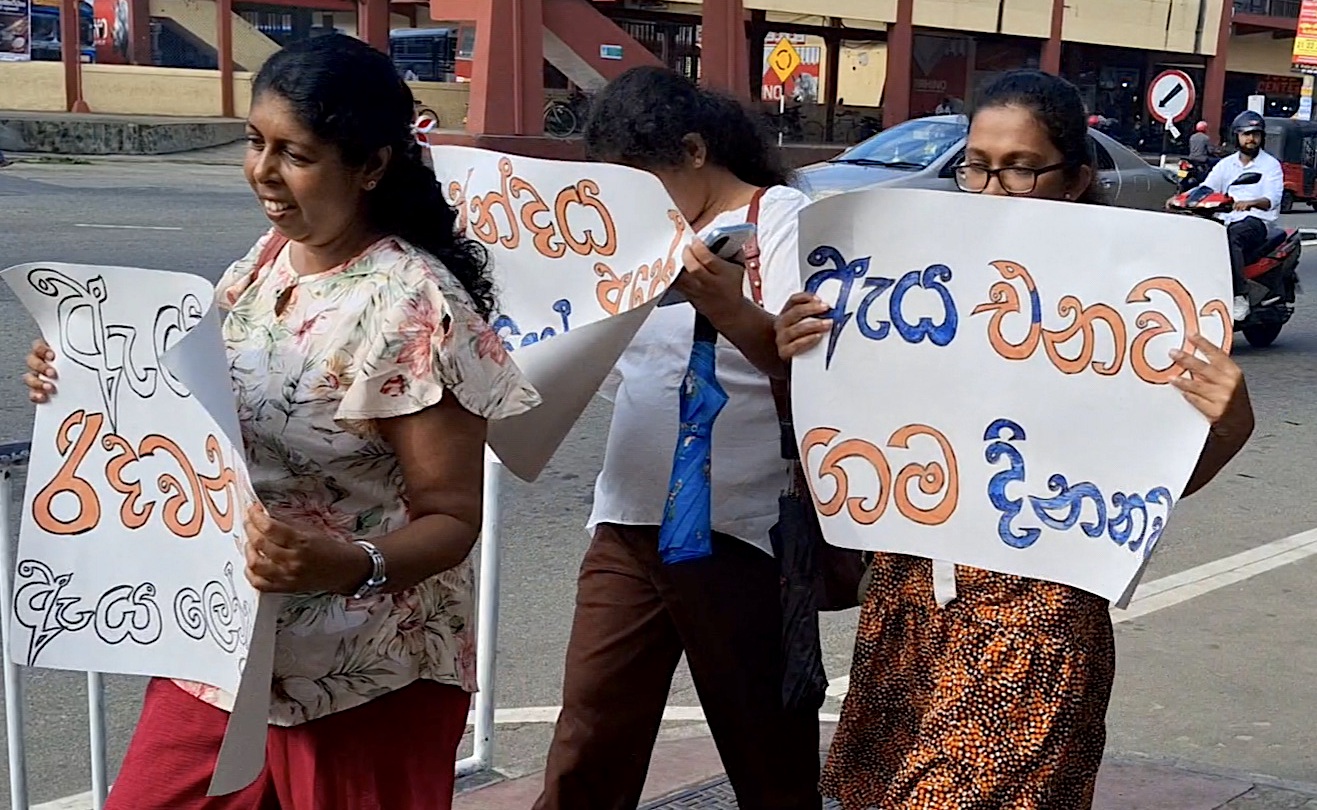
A two day intervention programme that brought together women leaders from the Polonnaruwa and Monaragala Districts was held in Matara under NPC’s Women Organized for Inclusion through Community Engagement (WOICE) project, creating a powerful platform for cross-district collaboration and solidarity.
A total of 106 participants joined the programme, demonstrating a shared commitment to advancing women’s rights, strengthening leadership and addressing pressing gender-related challenges at community and national levels.
The programme commenced with a peaceful and public demonstration in Matara. Women leaders walked in unity carrying placards and banners, calling for increased women’s representation in the upcoming Provincial Council elections and an end to verbal violence and all forms of abuse against women.
The peace walk symbolised resilience, unity and collective determination to secure greater gender equality and political participation. It also served as a reminder that women’s voices must be central in governance and public decision making.
The programme concluded with a panel discussion with Minister of Women and Child Affairs Saroja Savithri Paulraj, OIC of the Children and Women’s Bureau in Matara A.P. Neela de Silva, Additional District Secretary Kanchana Talapawila and others.
The discussion addressed a wide range of challenges affecting women, including political representation, gender-based violence, economic barriers and institutional support mechanisms. Women leaders shared their experiences, concerns and proposals, resulting in a practical, solution-oriented dialogue focused on strengthening women’s empowerment at both community and policy levels.
Sri Lankan women continue to play a pivotal role in national development. They serve as primary caregivers while contributing significantly to key sectors such as agriculture, garment manufacturing, foreign employment, education and health services. In post-conflict communities, women have been instrumental in peacebuilding and reconciliation, rebuilding trust and fostering social cohesion.
Sri Lankan women continue to play a pivotal role in national development. They serve as primary caregivers while contributing significantly to key sectors such as agriculture, garment manufacturing, foreign employment, education and health services. In post-conflict communities, women have been instrumental in peacebuilding and reconciliation, rebuilding trust and fostering social cohesion.
Despite these contributions, women face persistent structural and cultural barriers. Deep-rooted patriarchal norms limit opportunities, reinforce wage disparities and maintain a significant glass ceiling in leadership. Many women shoulder the double burden of paid employment alongside domestic responsibilities. Gender-based violence and safety concerns further restrict full participation in public life.
Although constitutional guarantees ensure equality, women’s political representation remains critically low - below 7% in Parliament - despite high literacy rates and strong health indicators. The introduction of a 25% quota for women in local government in 2017 marked progress; however, many women leaders continue to face exclusion from meaningful decision making roles due to financial barriers, male dominated party structures, cultural stereotypes and election-related violence.
The intervention programme demonstrated the power of collaboration across districts and sectors. By creating safe spaces for dialogue and public advocacy, the project continues to empower women to raise their voices, influence policy and claim their rightful place in governance. The initiative reinforces NPC’s commitment to fostering inclusive participation, reducing gender-based violence and promoting equitable representation.
Achieving full gender equality requires dismantling structural barriers, ensuring safety and dignity, expanding leadership opportunities and recognising women not only as caregivers but as equal partners in shaping a just, inclusive and peaceful society.