

The European Union funded Active Citizens for Elections and Democracy (ACED) project continued its efforts to promote inclusive governance and democratic participation in Sri Lanka. Three activities were implemented - a television interview series to counter negative narratives on devolution, a youth targetted social media campaign to promote youth political participation and a series of local level advocacy campaigns on youth participation in politics.
As part of efforts to counter negative narratives on devolution and promote informed public dialogue, the project conducted four television interviews broadcast on Swarnavahini. The first interview featured NPC Executive Director Jehan Perera and Professor A. Sarveswaran, who discussed the importance of power devolution and the role of provincial councils in strengthening democratic governance. The second interview brought together Professor Deepika Udagama and former MP M. Thilakarajah, focusing on minority participation in politics, including the representation of the Malaiyaha community. The third interview featured Dr. Crishni Silva from the University of Colombo and Ms. Kanaka Abeygunawardana, who discussed youth and women’s participation in politics, including the importance of quota systems. The final interview featured Mr. Sampath Randunna, who highlighted the importance of youth participation in politics, the challenges faced by young people and the historical significance of youth engagement in the political landscape.
The ACED project also implemented a youth-targetted social media campaign throughout April to promote youth participation in politics, particularly through the youth quota system. The campaign was developed by collecting voice clips from youth across multiple districts and compiling them into video content that reflected their experiences, concerns and perspectives.
The campaign gave special attention to the voices of Malaiyaha youth from Nuwara Eliya, Badulla and Ratnapura, highlighting their challenges in accessing political opportunities. Many of them identified barriers to participation, including entrenched family-based political systems, financial constraints and limited access to opportunities within party structures. They pointed out that while youth were often engaged during election campaigns to mobilise support, they were frequently excluded from meaningful political decision making processes.
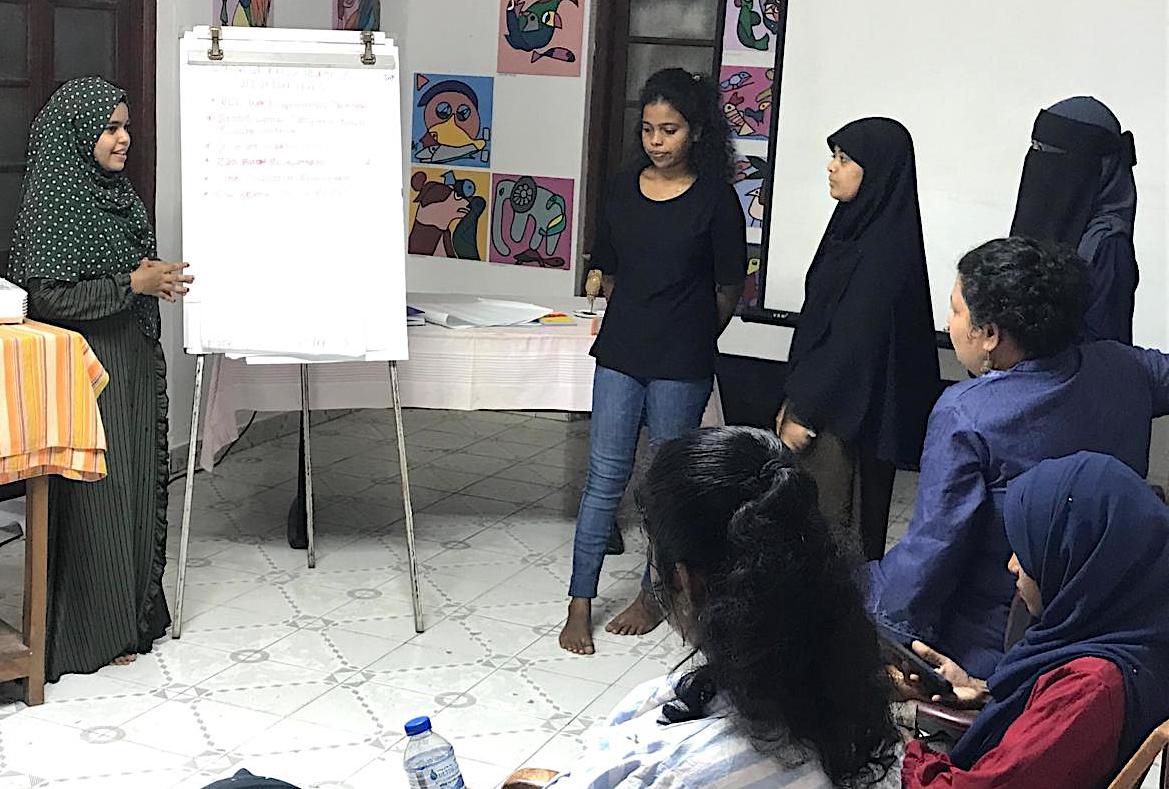
Despite these challenges, the campaign demonstrated that young people possessed strong political awareness, leadership potential and a willingness to contribute to community development. Five local level advocacy campaigns were also implemented by youth in the Kandy, Kalutara, Matara, Batticaloa and Jaffna Districts.