

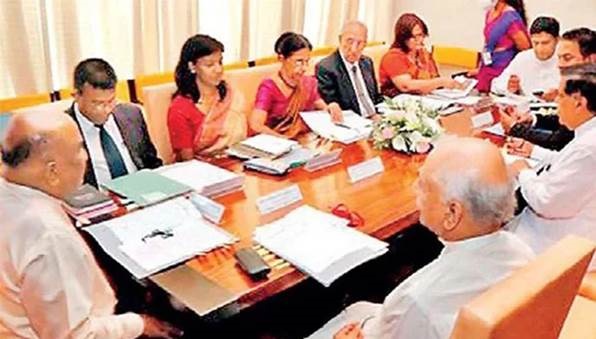
The Constitutional Council stands out as one of Sri Lanka’s most important governance mechanisms particularly at a time when even long‑established democracies are struggling with the dangers of executive overreach. Sri Lanka’s attempt to balance democratic mandate with independent oversight places it within a small but important group of constitutional arrangements that seek to protect the integrity of key state institutions without paralysing elected governments. Democratic power must be exercised, but it must also be restrained by institutions that command broad confidence. In each case, performance has been uneven, but the underlying principle is shared.
Comparable mechanisms exist in a number of democracies. In the United Kingdom, independent appointments commissions for the judiciary and civil service operate alongside ministerial authority, constraining but not eliminating political discretion. In Canada, parliamentary committees scrutinise appointments to oversight institutions such as the Auditor General, whose independence is regarded as essential to democratic accountability. In India, the collegium system for judicial appointments, in which senior judges of the Supreme Court play the decisive role in recommending appointments, emerged from a similar concern to insulate the judiciary from excessive political influence.
The Constitutional Council in Sri Lanka was developed to ensure that the highest level appointments to the most important institutions of the state would be the best possible under the circumstances. The objective was not to deny the executive its authority, but to ensure that those appointed would be independent, suitably qualified and not politically partisan. The Council is entrusted with oversight of appointments in seven critical areas of governance. These include the judiciary, through appointments to the Supreme Court and Court of Appeal, the independent commissions overseeing elections, public service, police, human rights, bribery and corruption, and the office of the Auditor General.
JVP Advocacy
The most outstanding feature of the Constitutional Council is its composition. Its ten members are drawn from the ranks of the government, the main opposition party, smaller parties and civil society. This plural composition was designed to reflect the diversity of political opinion in Parliament while also bringing in voices that are not directly tied to electoral competition. It reflects a belief that legitimacy in sensitive appointments comes not only from legal authority but also from inclusion and balance.
The idea of the Constitutional Council was strongly promoted around the year 2000, during a period of intense debate about the concentration of power in the executive presidency. Civil society organisations, professional bodies and sections of the legal community championed the position that unchecked executive authority had led to abuse of power and declining public trust. The JVP, which is today the core part of the NPP government, was among the political advocates in making the argument and joined the government of President Chandrika Bandaranaike Kumaratunga on this platform.
The first version of the Constitutional Council came into being in 2001 with the 17th Amendment to the Constitution during the presidency of Chandrika Bandaranaike Kumaratunga. The Constitutional Council functioned with varying degrees of effectiveness. There were moments of cooperation and also moments of tension. On several occasions President Kumaratunga disagreed with the views of the Constitutional Council, leading to deadlock and delays in appointments. These experiences revealed both the strengths and weaknesses of the model.
Since its inception in 2001, the Constitutional Council has had its ups and downs. Successive constitutional amendments have alternately weakened and strengthened it. The 18th Amendment significantly reduced its authority, restoring much of the appointment power to the executive. The 19th Amendment reversed this trend and re-established the Council with enhanced powers. The 20th Amendment again curtailed its role, while the 21st Amendment restored a measure of balance. At present, the Constitutional Council operates under the framework of the 21st Amendment, which reflects a renewed commitment to shared decision making in key appointments.
Undermining Confidence
The particular issue that has now come to the fore concerns the appointment of the Auditor General. This is a constitutionally protected position, reflecting the central role played by the Auditor General’s Department in monitoring public spending and safeguarding public resources. Without a credible and fearless audit institution, parliamentary oversight can become superficial and corruption flourishes unchecked. The role of the Auditor General’s Department is especially important in the present circumstances, when rooting out corruption is a stated priority of the government and a central element of the mandate it received from the electorate at the presidential and parliamentary elections held in 2024.
So far, the government has taken hitherto unprecedented actions to investigate past corruption involving former government leaders. These actions have caused considerable discomfort among politicians now in the opposition and out of power. However, a serious lacuna in the government’s anti-corruption arsenal is that the post of Auditor General has been vacant for over six months. No agreement has been reached between the government and the Constitutional Council on the nominations made by the President. On each of the four previous occasions, the nominees of the President have failed to obtain its concurrence.
The President has once again nominated a senior officer of the Auditor General’s Department whose appointment was earlier declined by the Constitutional Council. The key difference on this occasion is that the composition of the Constitutional Council has changed. The three representatives from civil society are new appointees and may take a different view from their predecessors. The person appointed needs to be someone who is not compromised by long years of association with entrenched interests in the public service and politics. The task ahead for the new Auditor General is formidable. What is required is professional competence combined with moral courage and institutional independence.
New Opportunity
By submitting the same nominee to the Constitutional Council, the President is signaling a clear preference and calling it to reconsider its earlier decision in the light of changed circumstances. If the President’s nominee possesses the required professional qualifications, relevant experience, and no substantiated allegations against her, the presumption should lean toward approving the appointment. The Constitutional Council is intended to moderate the President’s authority and not nullify it.
A consensual, collegial decision would be the best outcome. Confrontational postures may yield temporary political advantage, but they harm public institutions and erode trust. The President and the government carry the democratic mandate of the people; this mandate brings both authority and responsibility. The Constitutional Council plays a vital oversight role, but it does not possess an independent democratic mandate of its own and its legitimacy lies in balanced, principled decision making.
Sri Lanka’s experience, like that of many democracies, shows that institutions function best when guided by restraint, mutual respect, and a shared commitment to the public good. The erosion of these values elsewhere in the world demonstrates their importance. At this critical moment, reaching a consensus that respects both the President’s mandate and the Constitutional Council’s oversight role would send a powerful message that constitutional governance in Sri Lanka can work as intended.