

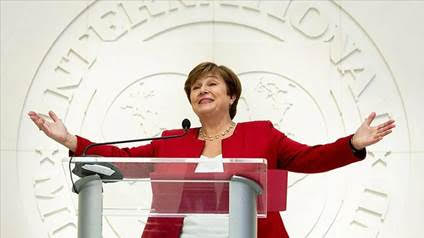
The visit by IMF Managing Director Kristalina Georgieva to Sri Lanka was widely described as a success for the government. She was fulsome in her praise of the country and its developmental potential. The grounds for this success and collaborative spirit go back to the inception of the agreement signed in March 2023 in the aftermath of Sri Lanka’s declaration of international bankruptcy. The IMF came in to fulfil its role as lender of last resort. The government of the day bit the bullet. It imposed unpopular policies on the people, most notably significant tax increases. At a moment when the country had run out of foreign exchange, defaulted on its debt, and faced shortages of fuel, medicine and food, the IMF programme restored a measure of confidence both within the country and internationally.
Since 1965 Sri Lanka has entered into agreements with the IMF on 16 occasions none of which were taken to their full term. The present agreement is the 17th agreement . IMF agreements have traditionally been focused on economic restructuring. Invariably the terms of agreement have been harsh on the people, with priority being given to ensure the debtor country pays its loans back to the IMF. Fiscal consolidation, tax increases, subsidy reductions and structural reforms have been the recurring features. The social and political costs have often been high. Governments have lost popularity and sometimes fallen before programmes were completed. The IMF has learned from experience across the world that macroeconomic reform without social protection can generate backlash, instability and policy reversals.
The experience of countries such as Greece, Ireland and Portugal in dealing with the IMF during the eurozone crisis demonstrated the political and social costs of austerity, even though those economies later stabilised and returned to growth. The evolution of IMF policies has ensured that there are two special features in the present agreement. The first is that the IMF has included a safety net of social welfare spending to mitigate the impact of the austerity measures on the poorest sections of the population. No country can hope to grow at 7 or 8 percent per annum when a third of its people are struggling to survive. Poverty alleviation measures in the Aswesuma programme, developed with the agreement of the IMF, are key to mitigating the worst impacts of the rising cost of living and limited opportunities for employment.
Governance Included
The second important feature of the IMF agreement is the inclusion of governance criteria to be implemented alongside the economic reforms. It goes to the heart of why Sri Lanka has had to return to the IMF repeatedly. Economic mismanagement did not take place in a vacuum. It was enabled by weak institutions, politicised decision making, non-transparent procurement, and the erosion of checks and balances. In its economic reform process, the IMF has included an assessment of governance related issues to accompany the economic restructuring process. At the top of this list is tackling the problem of corruption by means of publicising contracts, ensuring open solicitation of tenders, and strengthening financial accountability mechanisms.
The IMF also encouraged a civil society diagnostic study and engaged with civil society organisations regularly. The civil society analysis of governance issues which was promoted by Verite Research and facilitated by Transparency International was wider in scope than those identified in the IMF’s own diagnostic. It pointed to systemic weaknesses that go beyond narrow fiscal concerns. The civil society diagnostic study included issues of social justice such as the inequitable impact of targeting EPF and ETF funds of workers for restructuring and the need to repeal abuse prone laws such as the Prevention of Terrorism Act and the Online Safety Act. When workers see their retirement savings restructured without adequate consultation, confidence in policy making erodes. When laws are perceived to be instruments of arbitrary power, social cohesion weakens.
During a meeting between the IMF Managing Director Georgeiva and civil society members last week, there was discussion on the implementation of those governance measures in which she spoke in a manner that was not alien to the civil society representatives. Significantly, the civil society diagnostic report also referred to the ethnic conflict and the breakdown of interethnic relations that led to three decades of deadly war, causing severe economic losses to the country. This was also discussed at the meeting. Governance is not only about accounting standards and procurement rules. It is about social justice, equality before the law, and political representation. On this issue the government has more to do. Ethnic and religious minorities find themselves inadequately represented in high level government committees. The provincial council system that ensured ethnic and minority representation at the provincial level continues to be in abeyance.
Beyond IMF
The significance of addressing governance issues is not only relevant to the IMF agreement. It is also important in accessing tariff concessions from the European Union. The GSP Plus tariff concession given by the EU enables Sri Lankan exports to be sold at lower prices and win markets in Europe. For an export dependent economy, this is critical. Loss of such concessions would directly affect employment in key sectors such as apparel. The government needs to address longstanding EU concerns about the protection of human rights and labour rights in the country. The EU has, for several years, linked the continuation of GSP Plus to compliance with international conventions. This includes the condition that the Prevention of Terrorism Act (PTA) be brought into line with international standards. The government’s alternative in the form of the draft Protection of the State from Terrorism Act (PTSA) is less abusive on paper but is wider in scope and retains the core features of the PTA.
Governance and social justice factors cannot be ignored or downplayed in the pursuit of economic development. If Sri Lanka is to break out of its cycle of crisis and bailout, it must internalise the fact that good governance which promotes social justice and more fairly distributes the costs and fruits of development is the foundation on which durable economic growth is built. Without it, stabilisation will remain fragile, poverty will remain high, and the promise of 7 to 8 percent growth will remain elusive. The implementation of governance reforms will also have a positive effect through the creative mechanism of governance linked bonds, an innovation of the present IMF agreement.
The Sri Lankan think tank Verité Research played an important role in the development of governance linked bonds. They reduce the rate of interest payable by the government on outstanding debt on the basis that better governance leads to a reduction in risk for those who have lent their money to Sri Lanka. This is a direct financial reward for governance reform. The present IMF programme offers an opportunity not only to stabilise the economy but to strengthen the institutions that underpin it. That opportunity needs to be taken. Without it, the country cannot attract investment, expand exports and move towards shared prosperity and to a 7-8 percent growth rate that can lift the country out of its debt trap.